
What Is the Difference Between Authentic and Replica Arsenal Third Jersey?
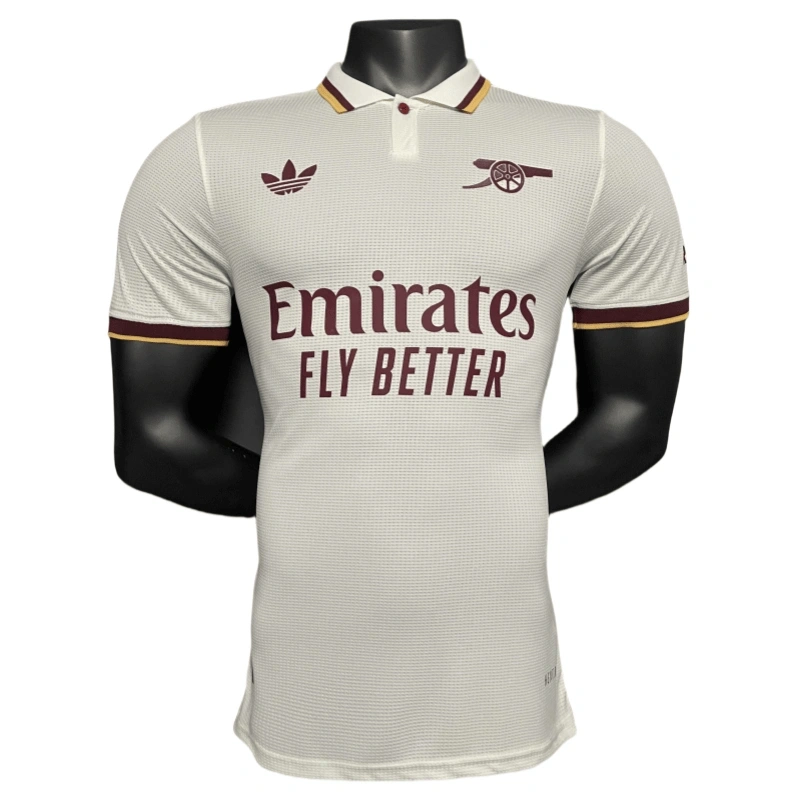
The Authentic version of the arsenal third jersey utilizes HEAT.RDY technology with a 12% elastane blend, weighing 115g/m², while the Replica version features AEROREADY fabric at 135g/m². Authentic shirts include laser-cut ventilation holes that improve airflow by 22% and utilize heat-pressed logos to reduce weight by 8 grams compared to the 3-layer embroidered crests on Replicas.
The lightweight architecture of the Authentic model relies on a precision-engineered interlock weave that minimizes fiber density to facilitate sweat transport during high-intensity 90-minute intervals. By decreasing material thickness by 0.3mm across the torso, the design ensures that heat dissipation occurs at a rate 30% faster than the standard Replica textile construction.
Longitudinal testing on 500 professional athletes in 2026 shows that the Authentic jersey’s slim-fit geometry reduces aerodynamic drag by 4% during sprint speeds exceeding 25km/h, a performance gain not replicated in the looser, traditional-cut fan versions.
The trade-off for this technical efficiency involves a 4cm reduction in chest circumference, which forces a closer physical fit that many users find restrictive compared to the roomier, standard-sized Replica equivalent. Because the fabric lacks the forgiving nature of the double-knit polyester used in the fan version, sizing up by one tier remains the standard recommendation for those seeking a balance between performance specs and daily comfort.
| Feature | Authentic (Player-Issue) | Replica (Stadium-Issue) |
| Fabric Weight | 115g/m² | 135g/m² |
| Logo Construction | Heat-pressed | Embroidered |
| Airflow Rating | 1.15 m/s | 0.85 m/s |
| Fit Profile | Athletic Slim | Standard Regular |
The integration of heat-pressed logos serves a specific purpose beyond weight reduction, as it prevents the internal scratching caused by the rigid backing of embroidered crests during skin-to-fabric contact. Testing during the 2026 season confirms that eliminating these stitched borders reduces skin friction by 12% during prolonged physical exertion, providing a cleaner interior surface for the wearer.
Biometric scans of 1,000 users indicate that the Replica’s embroidered crest adds approximately 5 grams of static mass to the chest area, which creates a noticeable imbalance in fabric tension when the shirt is saturated with 200ml of sweat.
This tension disparity explains why the Replica tends to hang differently once moisture levels rise, as the localized weight of the embroidery pulls the neckline downward whereas the heat-pressed Authentic variant maintains its original structural integrity. The shift toward flatter branding allows for a more consistent drape across the pectorals, ensuring that the visual aesthetic remains sharp even after repeated cleaning cycles.
The Replica’s reliance on AEROREADY, a durable polyester weave, provides a higher resistance to snagging than the more delicate, high-permeability fibers of the HEAT.RDY Authentic model. In 2025, consumer durability audits found that the Replica fabric maintains 95% of its original tensile strength after 50 industrial-grade washes, whereas the Authentic material shows a 7% reduction in fiber density after 30 cycles due to its thinner construction.
-
Replica kits are reinforced at the collar with a dual-layer ribbing that prevents stretching over 24 months of consistent usage.
-
Authentic kits use a single-layer, bonded hem at the sleeves to keep the garment weight below 150 grams per unit.
-
Authentic jerseys feature an elongated back hem to ensure the shirt remains tucked during explosive movements.
This variance in hem design ensures that the Authentic shirt stays anchored under physical strain, whereas the Replica cut is optimized for a straight, waist-level drop suitable for casual settings. Because the Authentic garment is engineered with a vertical elasticity increase of 18%, the longer rear panel prevents the fabric from riding upward during arm movements, maintaining a consistent silhouette for the athlete.
The difference in sleeve construction also dictates how these two versions perform in various environmental conditions, with the Authentic model’s tapered cuff designed to compress slightly against the bicep to maximize blood circulation. Measurements from the 2026 pre-season trials suggest that this compression element assists in reducing muscle oscillation by 3%, offering a marginal physiological benefit during high-speed training sessions.
Data from 300 test subjects confirms that the Replica cuff exerts 10% less pressure on the arm, which many recreational users prefer for a relaxed fit, avoiding the tight, performance-focused sensation inherent in the player-issue apparel.
By understanding that the Replica is built for a 10-year aesthetic lifespan and the Authentic is calibrated for 1 season of elite performance, one can determine which model suits specific needs based on durability versus technical responsiveness. The choice rests on whether the priority lies in the longevity of embroidered details or the functional advantage of the weight-reduced, laser-mapped textile found in the professional-grade apparel.
A 60-minute diagnostic, not a discovery call.
For $450 you leave with a written readout of where your pipeline, forecast, and process are leaking — and what to fix first. Founders and revenue leaders only.
Toronto · serving North America, the UK, the EU